LearningHub
Relation-centered Management (RCM)
4 Competency-building Learning Opportunities
What Makes RCM Essential for MBOs?
The Melos Institute is the sole creator of and your exclusive source for information, knowledge, and tools specific to relation-centered management (RCM). Its findings have been generated – over several decades – from a series of applied research initiatives working directly in, with, and for membership-based organizations (MBOs) representing a wide range of professions, trades, and personal avocations (unions excepted) in the USA as well as developing countries.
MBOs’ founders established these organizations to do more than represent their practice settings (i.e., in the public policy arena). Their primary intention for forming these institutions was for them to become the architects and arbiters of their practice settings’ body of knowledge.
Thus, MBOs exist to identify, define, shape, and advance the BOK specific to their members’ practice setting. The information and knowledge that is identified and defined, is then compiled, analyzed, and converted into the kind of programs, products, and services in ways that empowers their members to advance positive and lasting social change for themselves, those in their practice settings, as well as the society-at-large.
RCM’s body of knowledge (BOK) is uniquely designed to achieve these outcomes. The body of knowledge currently in use by MBOs was initially designed and intended for use in for-profit settings.
How Does RCM Generate Better Outcomes?
RCM recognizes that, while MBOs appear to operate like for-profit as well as other nonprofit organizations, they differ substantially in their purpose, scope, focus, and goals; most especially in their structural framework. Thus, MBOs consist of two wholly-separate yet highly-interdependent elements: an organization and an actual membership community (albeit portable and specially-defined).
MBOs’ effectiveness is dependent on their members’ willingness to share their information, knowledge, experiences, expertise, and connections in two ways: 1. advance their organizations’ goals and priorities, and 2. assist fellow members to do the same.
RCM’s body of knowledge reflects premises, principles, policies, processes, practices, and procedures designed to empower volunteer and staff leaders as well as staff professionals to: govern and manage their organizations as well as build socially-cohesive and highly-engaged specially-defined membership communities.
Learning opportunities (in-person, online, or print) are designed with adult learning preferences (i.e., andragogy and synergogy) in mind; ensuring participation in whatever form generates a better understanding and deeper appreciation of RCM and its application in MBOs. Most sessions are complimentary, including opportunities for subsequent individual and/or group conversations.
Where Can I Learn More about RCM?
In 2024, the Institute published a book chronicling the emergence, formation, and development of RCM as an alternative to the existing body of knowledge for association management. Click here to learn more about its contents and purchase options.
If you find the concepts, ideas, and examples on this site interesting, useful, and noteworthy, we ask that you share those sentiments with your coworkers, peers, and colleagues.
Follow the Melos Institute on LinkedIn.
For answers to more specific questions about RCM, please contact us by phone or email:
main number: (505)428-0268 email: info@melosinstitute.org
RCM Learning Opportunities
Association management is one of the most complex and consequential professions in America. So much so that it requires a body of knowledge uniquely designed for use in associations; one dedicated to advancing the bodies of knowledge of their members’ practice settings (i.e., professions, trades, and personal avocations). RCM offers volunteer and staff leaders the opportunity to introduce key concepts and adjust existing strategies to achieve better and more lasting outcomes…over time, not overnight.
Unlike other professions where individuals must prepare before entering into the practice setting, staff professionals have no alternative but to learn their association management job…on the job. That’s why peer-to-peer exchanges at key events are valued so highly. While these interactions provide best practices and expert advice of what to do, they often lack the context of why it works. These sessions do more than “give you a fish,” they “teach you to fish;” thus expanding your awareness and understanding of how to achieve outcomes that not only realize your goals, but also generate lasting positive change.
Most sessions are available on a complimentary obligation-free basis. We do this intentionally to remove any doubt that our interest is solely focused on giving you access to an approach to association management uniquely designed to deliver better and more lasting outcomes…for your organization and your members.
We fund our applied research initiatives from donations from individuals who and/or organizations that have found value in incorporating relation-centered concepts into their existing strategies. Their generous support allows the Institute’s relation-centered experts to further its efforts to develop, shape, advance, and share a relation-centered body of knowledge for MBOs.
Current Learning Opportunities Include
Function-specific
Introducing key RCM concepts
Options
Insight Webinars
Member Engagement
Clarity Clinics:
Member Engagement
Momentary Mentoring
Member Engagement
Leadership Development
Learning Opportunities
Communications
Program-specific
Providing strategic RCM support
Option
Integrating RCM into Existing Strategies
Member Engagement Blueprint Program (MBO-specific)
Needs-specific (7 RCM functions)
Tackling key challenges/opportunities
Options
Formal
Customized Individual/Group Connections
Informal
Confidential Connections
Capacity-specific
Exploring broader novel and lasting solutions
Options
Individual
Organizational
Relation-centered Insights

Three Things Most Association Staff Never Learn about Their Members
September 30, 2026Of all the insights shared in the association management literature, the most frequent seems to…
Consequences When a Profession is Inaccurately Defined…
Then Seeks to Maintain that Status QuoAugust 29, 2026For most professionals, day-to-day priorities, regardless of their chosen profession, demand their full and complete…
Cracking the Code: How Paying Attention to History Improves 21st Century Associations’ Effectiveness
July 30, 2026Dan Pallotta, an entrepreneur, author, and human activist, is passionate about the role that nonprofits…
Associations in America Have Historically Played a Pivotal Role in Shaping, Advancing, and Protecting Democracy…What’s Hindering Them from Doing So Now?
June 30, 2026Not since World War II have associations - as a collective population of organizations -…
What’s the Greatest Obstacle to Member Engagement…Hint: It’s Not Your Members’ Availability or Expectations
May 31, 2026Ask anyone who - however short or long their tenure in association management - why…
21st Century Member Engagement Are Associations Truly Ready to Meet THIS Moment? Is Yours?
April 30, 2026Less than one-third of these business executives were optimistic; expecting a positive outcome in the…
How 100 Volunteer Leaders’ Stories Reshaped My Understanding of Member Engagement
March 30, 2026“Members produce what they consume.” James R. Hudson, Ph.D.Sociologist/Co-founder Melos Institute Seriously, can any other…
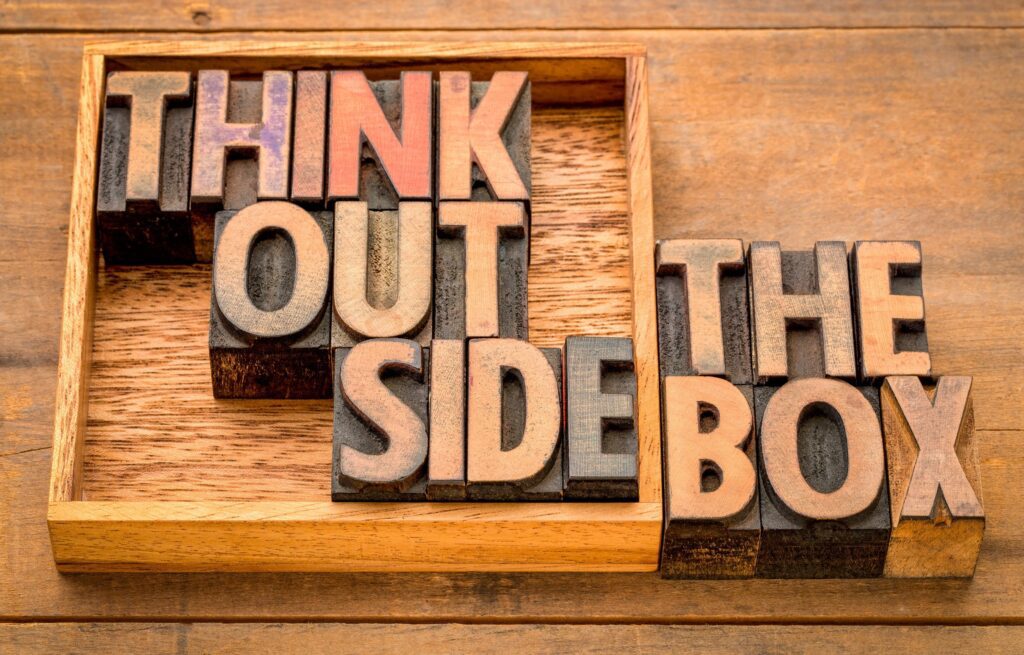
Unexpected Current Shortcomings of Using “Outside the Box Thinking” When It Comes to Member Engagement
February 23, 2026Hard to imagine the iconic expression - “thinking outside the box” – was prompted by…
Why Member Engagement Matters More Now… Than Any Time in American History
January 31, 2026Achieving a high degree of member engagement, for most associations, has proven to be as…